
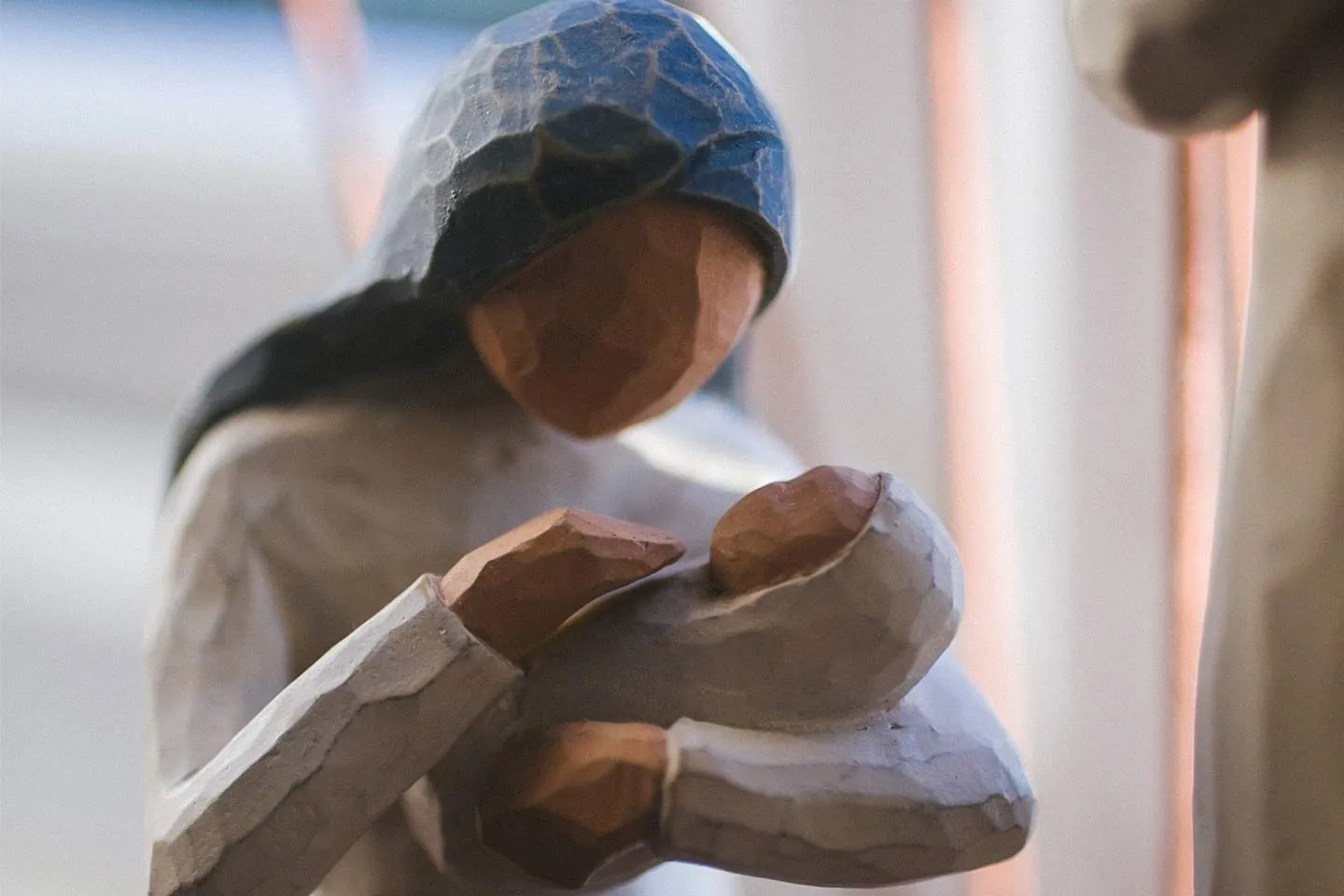
Jung once remarked that the mother complex is perhaps the commonest and most important of all complexes. It is a striking claim, and the more closely you look at adult life, the more defensible it becomes. Long after childhood, the early experience of being mothered, or of its absence, continues to shape how a person seeks comfort, tolerates closeness, handles dependency and steps into their own authority.
Archetype and complex
It helps to separate two things Jung kept distinct. The mother archetype is a universal, inherited pattern, a deep predisposition in the psyche to experience and respond to the maternal. The mother complex is what forms in an individual when that archetype meets a particular real mother, in a particular family, with all its warmth and all its wounds. We are born ready to find a mother. What we actually find, and fail to find, lays down a charged cluster of feeling that operates for the rest of life, often outside awareness.
The two faces
The analyst Erich Neumann, in his 1955 study The Great Mother, mapped the archetype’s profound ambivalence. The maternal is not one thing but a polarity. There is the Good Mother: nourishing, holding, the source of life, safety and unconditional welcome. And there is what Neumann called the Terrible Mother: the aspect that devours, possesses and will not let life separate from her.
Jung described this darker pole in similar terms, as connoting anything secret, hidden, dark, that devours and seduces and will not release. The image is not of cruelty exactly but of a love that cannot let go, a generative force that wants to hold on to the life it has created. Neumann’s insight was that consciousness itself has to be won out of this maternal ground. To grow up at all is to emerge from the mother, and the devouring aspect is precisely the pull that resists that emergence.
How it shows up in adult life
A strong mother complex rarely announces itself as being about one’s mother. It shows up instead as a pattern. It can look like a man who seeks in every partner the perfect care he had or never had, and is disappointed each time. It can look like a difficulty leaving home in the deeper sense, an inability to commit to one’s own separate life because some part remains bound. It can look like its apparent opposite, a driven independence that cannot bear any closeness at all, because closeness once meant being engulfed.
Neither pole, idealising the mother or fleeing her, is freedom. Both are still organised around her. The work is to become genuinely separate: to grieve what was missing, to relinquish the fantasy of the perfect mother still owed to us, and to claim the nourishing and the authoritative capacities as one’s own rather than seeking or fearing them in others.
The work of separation
In Jungian analysis this is patient work, because the complex is old and runs beneath conscious choice. It involves recognising the pattern as it plays out in present relationships, understanding what it is protecting and what it is still seeking, and gradually building the inner ground that the early relationship did not fully provide. The aim is not to blame a real mother, who was usually doing her best inside her own limits, but to become free enough to live a life that is genuinely one’s own.
Our page on the mother archetype explores these ideas further, and if any of this resonates you are welcome to get in touch to talk about working with it in analysis.